Learning to Listen Without Words: A Parent's Guide to Reading Your Preemie's Signals
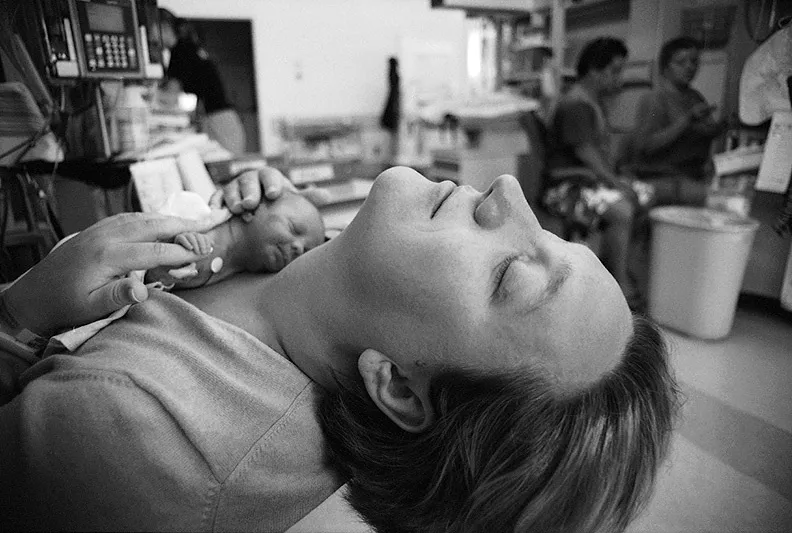
Photo: Polihale, CC BY-SA 3.0, via Wikimedia Commons
Somewhere around week three of the NICU stay, something shifts. The machines start to fade into the background, and you begin to notice her — the tiny wrinkle of a brow when the light hits just right, the splayed fingers that mean she's overwhelmed, the slow, steady breathing that tells you she's finally settled into your chest.
Parents of full-term babies spend months learning to decode cries. Parents of preemies learn something subtler: a language made almost entirely of whispers. And ask any NICU nurse — those parents become fluent faster than anyone expects.
What Cue-Based Care Actually Means
"We tell families all the time: your baby is communicating from day one," says Marissa, a neonatal nurse with fifteen years in a Level IV NICU in Ohio. "They just don't use sound yet. Our job is to help parents translate."
Cue-based care is the philosophy behind much of modern neonatal developmental care. Instead of putting every baby on a rigid schedule for feeding, holding, and touching, nurses watch for signals of readiness — and signals of stress — and respond accordingly. A preemie who's ready to try a bottle might root, bring a hand to their mouth, or show alert, bright eyes. A baby who needs a break might look away, hiccup, yawn repeatedly, or go a little limp.
The beauty of it? Parents can do this too. In fact, they're often better at it than anyone, because they're not rotating between four patients. They know their baby.
The Signals Worth Learning
Developmental specialists often group preemie cues into two broad categories: signs of engagement and signs of overload. Here's a starter dictionary.
"I'm here with you" cues:
- Steady breathing and relaxed facial muscles
- Hands resting gently, maybe near the face or chest
- Alert, calm eyes — some preemies hold a gaze that can stop your heart
- Smooth movements, or a hand reaching toward you
"I need a moment" cues:
- A furrowed brow, wrinkled forehead, or grimace
- Fanning or splayed fingers, sometimes called the "salute"
- Hiccups, sneezing, or yawning that seems out of nowhere
- Looking away or staring off — a preemie's version of closing a door
- Color changes, flailing limbs, or a sudden drop in energy
That last category gets misread constantly, especially by visitors. "Grandma wants to hold the baby, and the baby yawns and hiccups twice, and everyone says how cute," Marissa laughs. "But that's the baby saying that's enough for today." Learning to see those moments as communication — not fussiness or randomness — changes everything about how a family moves through the NICU.
Kangaroo Care: Where the Conversation Gets Quieter
Skin-to-skin holding is where many parents first feel the language click. Nestled against your chest, away from the overhead lights, a preemie often shows you exactly how they're doing. A softening of the jaw. Breathing that slows to match yours. A hand curling into the fabric of your shirt.
But the opposite is true too, and nurses want parents to know it's nothing to take personally. If your baby's brow creases during kangaroo care, or they startle and splay their fingers, that's not rejection — it's information. Maybe the transfer was bumpy. Maybe they were already tired. Maybe they just need five quiet minutes before being picked up again.
"Some of the most important parenting in the NICU is not picking up your baby," one developmental specialist told us. "Reading that 'not right now' and honoring it — that's responsive care. That's you telling your baby their voice matters."
A Practical Guide to Use During — and After — the Stay
You don't need a medical degree to become your baby's interpreter. You need patience, repetition, and a willingness to slow down. Here's the approach many NICUs teach:
1. Pause before you touch. Before a diaper change or a hold, give your baby a moment of stillness. Say hello softly. Let them know what's coming. Watch what they do.
2. Watch in threes. One hiccup might mean nothing. But a yawn, then a look-away, then splayed fingers? That's a pattern. Clusters of stress cues are your baby raising a hand.
3. Go slow on purpose. Preemies process the world at their own pace. Slower hands, softer voices, gentler transitions — the slower you move, the more cues you'll catch.
4. Keep a little mental notebook. Some families jot notes: Hates the left side during feeds. Loves having a hand on her head. Needs a minute after the stethoscope. After weeks in the NICU, you'll have a profile no chart can match.
5. Practice the pause-and-respond cycle. Signal, response, signal, response. Every time you notice and adjust, you're teaching your baby that the world is safe and their communication works. Researchers call this building trust. Parents call it falling in love.
6. Bring the language home. The signals don't disappear at discharge. A toddler overwhelmed at a birthday party may look away or go quiet — the same "I need a break" cue, just in a bigger kid. Parents of preemies often spot overload earlier than anyone else, because they've been reading it since their baby weighed three pounds.
You're Already the Expert
There's a strange irony in the NICU: parents often feel powerless, even as they quietly become the world's foremost authority on one very small person. No specialist knows whether your son settles faster with a hand on his back. No chart captures the way your daughter's breathing evens out the moment she hears your voice in the doorway.
Every furrowed brow you've noticed, every flinch you've honored, every quiet moment you've waited out — that's not just bonding. That's advocacy. That's parenting, in its earliest and most delicate form.
Your preemie has been talking all along. And nobody in that hospital — nobody anywhere — understands them quite like you do.