Two Cakes, One Little Fighter: Why So Many Preemie Families Celebrate a Second Birthday

Photo: first birthday smash cake baby with parents celebration, via cdn.slidesharecdn.com
Ask any preemie parent how old their child is and you may notice a tiny hesitation. There's the answer the calendar gives — and then there's the one that lives in their heart.
"She's two," a mom might say. "Well, she was due in March, so about twenty months adjusted."
If you've never lived in a NICU, that math can sound confusing. But for families of premature babies, it's second nature. And it might just be one of the most loving forms of accounting there is.
The Birthday That Almost Was
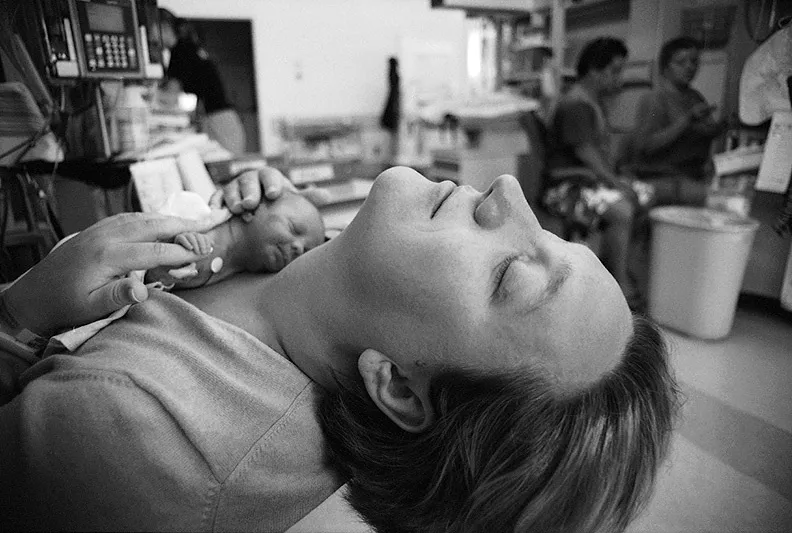
Every preemie has two dates that matter: the day they arrived, often suddenly and scary, and the day they were supposed to arrive. That due date — the one that slipped past in a blur of incubators, beeping monitors, and 3 a.m. pumping sessions — carries enormous emotional weight.
Many families call it the "due date birthday" and mark it quietly or not so quietly. Some bake a second cake. Some write a letter to the baby who "should have" been born that day. Others use it as a moment to reflect on how far their little one has come since the day the world showed up early.
There's no rulebook here. Some families celebrate both dates every year. Some only honor the due date in that first year, when development gaps feel most pronounced. And some let the tradition fade as their child grows. All of it is normal. All of it is valid.
What Corrected Age Actually Means
Here's the clinical part, made simple: a baby born at 30 weeks has missed roughly ten weeks of development that happens in the womb. Adjusted age — sometimes called corrected age — subtracts those missed weeks from the child's actual age to give a more realistic picture of where they should be developmentally.
Pediatricians typically use adjusted age until around age two, especially when tracking milestones like sitting up, crawling, first words, and walking. A baby born four months early who isn't walking at thirteen months isn't necessarily behind — by adjusted age, that child is only nine months old.
Dr. Maya Ellison, a neonatologist we spoke with, puts it this way: "Adjusted age isn't about lowering expectations. It's about setting accurate ones. These babies are on their own timeline, and that timeline is usually exactly right for them."
When Comparison Creeps In
Let's be honest — the playground is full of unsolicited comparisons. "My daughter walked at ten months." "He was off bottles by his first birthday."
For preemie parents, these comments can sting in ways others don't understand. That's part of why corrected age matters so much. It gives families a framework to step off the comparison treadmill and root their expectations in their own child's story.
It also gives parents language for those moments. "He was ten weeks early, so developmentally he's right on track," is a sentence that educates, deflects, and protects all at once.
Real Families, Real Traditions
We asked our community how they honor the due date birthday, and the answers ranged from sweet to tear-jerking.
One dad in Ohio told us his family eats birthday pancakes every year on his twins' due date — the same breakfast he ate in the hospital cafeteria the morning they were born at 28 weeks. A mom in Arizona writes an annual letter to her son on both birthdays, one about who he is and one about who he was becoming.
Another family throws what they call a "Gotchaversary Plus One" — celebrating the day they brought their daughter home from the NICU, then her due date a few weeks later. Two parties, double the frosting, and honestly, after a NICU stay, they've earned it.
Tips for Embracing the Second Birthday
If you're a preemie parent wondering whether to mark the due date, here's what seasoned families suggest:
- Keep it low-pressure. The due date birthday can be as simple as a candle in a cupcake or a quiet photo by the same window.
- Involve your child as they grow. Many kids love hearing the story of their early arrival — it's a story of strength, not sadness.
- Let it evolve. Some years the second birthday will feel meaningful; other years it won't. Follow your heart, not a checklist.
- Talk to your pediatrician about adjusted age. Bring questions to well visits and ask how corrected milestones apply to your child's care plan.
Every Week Counts
At the end of the day, corrected age is really a love language. It says: we will measure you by your journey, not by anyone else's calendar.
So if you meet a parent who mentions two birthdays, don't be confused. Be curious. Behind that extra cake is a NICU stay, a tiny fighter, and a family that learned to celebrate time in a whole new way.
Because for preemie families, every single week — born or unborn, celebrated or simply remembered — is a gift worth counting.