Big Feelings, Little Visitors: Keeping Siblings Connected While Your Preemie Is in the NICU

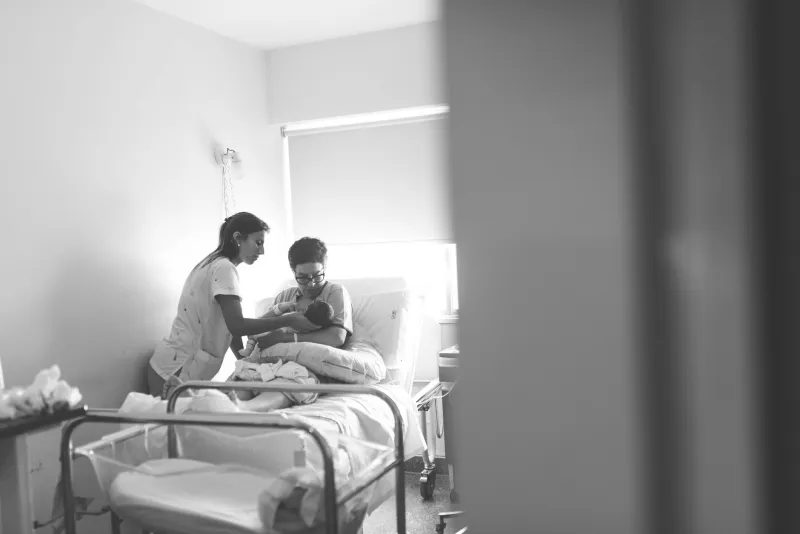
Photo: Duncan from Wellington, NZ, CC BY-SA 2.0, via Wikimedia Commons
The waiting room gets a lot of attention in preemie stories — the grandparents, the friends, the coworkers who check in. But there is often another person waiting, maybe sitting cross-legged on a vinyl chair or clutching a stuffed animal: your older child. They may not have the words for what is happening. They just know that mom and dad smell like hospital soap, that dinner looks different, and that everyone keeps saying the baby is 'getting stronger.'
If you are trying to hold your preemie's story and your older child's story at the same time, you are not alone. This is one of the quiet hard parts of the NICU — and it deserves just as much care.
The One Who Learned to Wait
Siblings of preemies become tiny experts in waiting. They learn to read the mood of a room. They notice when a parent's phone buzzes with an update. They may act out, cling harder, or suddenly seem too grown-up. None of that means they are being difficult. It usually means they are trying to make sense of a big change with very little control.
You may feel guilty about divided attention. That guilt is real, but it is not a report card on your love. Your older child does not need a perfect parent who is always in two places at once. They need a parent who keeps coming back, keeps explaining, and keeps reminding them that they are still held.
What Big Kids Actually Need to Hear
Keep explanations simple, honest, and repeatable. Children often need to hear the same thing many times before it settles.
For a preschooler, try: 'Your baby brother is in the hospital because he needs help growing. The doctors are taking good care of him. You did not make this happen. You are still my baby too.'
For a school-age child, you can add a little more: 'The baby's lungs and eating need extra time. It is not anyone's fault. You can ask me questions anytime, and I will tell you what I know.'
For a teenager, lead with respect: 'This is a lot, and I know it has changed things at home. I am trying to be honest with you. You do not have to be a parent here — you are still my kid.'
A few phrases are worth repeating: 'You are not forgotten.' 'The baby is lucky to have you.' 'It is okay to feel mad, sad, or excited — sometimes all in one day.' And maybe most important: 'You do not have to earn your place in this family by being easy.'
Small Rituals That Build a Bridge
Siblings do not need grand gestures. They need small, repeatable moments that say, 'You are part of this too.'
- A photo in the NICU. If hospital policy allows, tape a picture of your older child near the baby's isolette or crib. Tell your child, 'Your face is right there with the baby.'
- Drawings and stickers. Let them make a picture for the baby's space. Some units allow a small card or drawing; ask your nurse first.
- Matching tokens. A simple bracelet, sticker, or small toy that stays with the baby and a matching one that stays with the sibling can be a tangible reminder of connection.
- A sticker calendar. Instead of promising a homecoming date, mark days with stickers for visits, video calls, or special moments together. Keep it about connection, not deadlines.
- A voice note or bedtime story. Record your older child singing a song or telling a story. Some NICU parents play it softly for the baby, with nurse approval.
- A sibling storybook. Make a few pages together: 'When We Waited for You.' Let your child draw the family, the hospital, and the baby. It becomes a way to process the story in their own language.
If your hospital has a child life specialist, ask for help. They are wonderful at explaining NICU equipment, preparing siblings for visits, and offering age-appropriate books or activities.
When the Hospital Says No
Many NICUs limit young visitors, especially during flu and RSV season. That rule can feel like a door closing on your family. Explain it without making your child feel rejected: 'The hospital has rules to keep babies safe. It is not because you are not wanted. It is because you are so important that we are being extra careful.'
Window visits, video calls, and photos can still build connection. Let your child wave through the glass, send a drawing, or choose a song to share. If they cannot come inside, bring the NICU story to them in small pieces: what the room looks like, what the nurses do, what the baby's tiny hands are learning.
The Guilt Is Real — and It Is Not the Whole Story
You may not be able to be everywhere. That is a fact, not a failure. Try to protect one small pocket of time that belongs only to your older child — ten minutes of drawing, a walk around the block, a shared snack with no hospital talk. It does not have to be fancy. It has to be consistent.
Ask for help with logistics. Let a trusted adult handle bedtime once in a while. Say yes to a meal. Keep routines where you can, because predictability is a form of comfort. And try not to make your older child grow up faster just because the family is stretched thin. Let them be little where they can.
The Story They Will Tell Later
One day, your older child may not remember the exact dates or the beeping monitors. They may remember the sticker calendar, the picture taped to the isolette, or the way you said, 'You are still my baby too.' Those small things become the story of how your family held together while a tiny fighter grew.
Siblings are not side characters in the NICU. They are part of the love story — waiting, wondering, and learning how big their hearts can be.